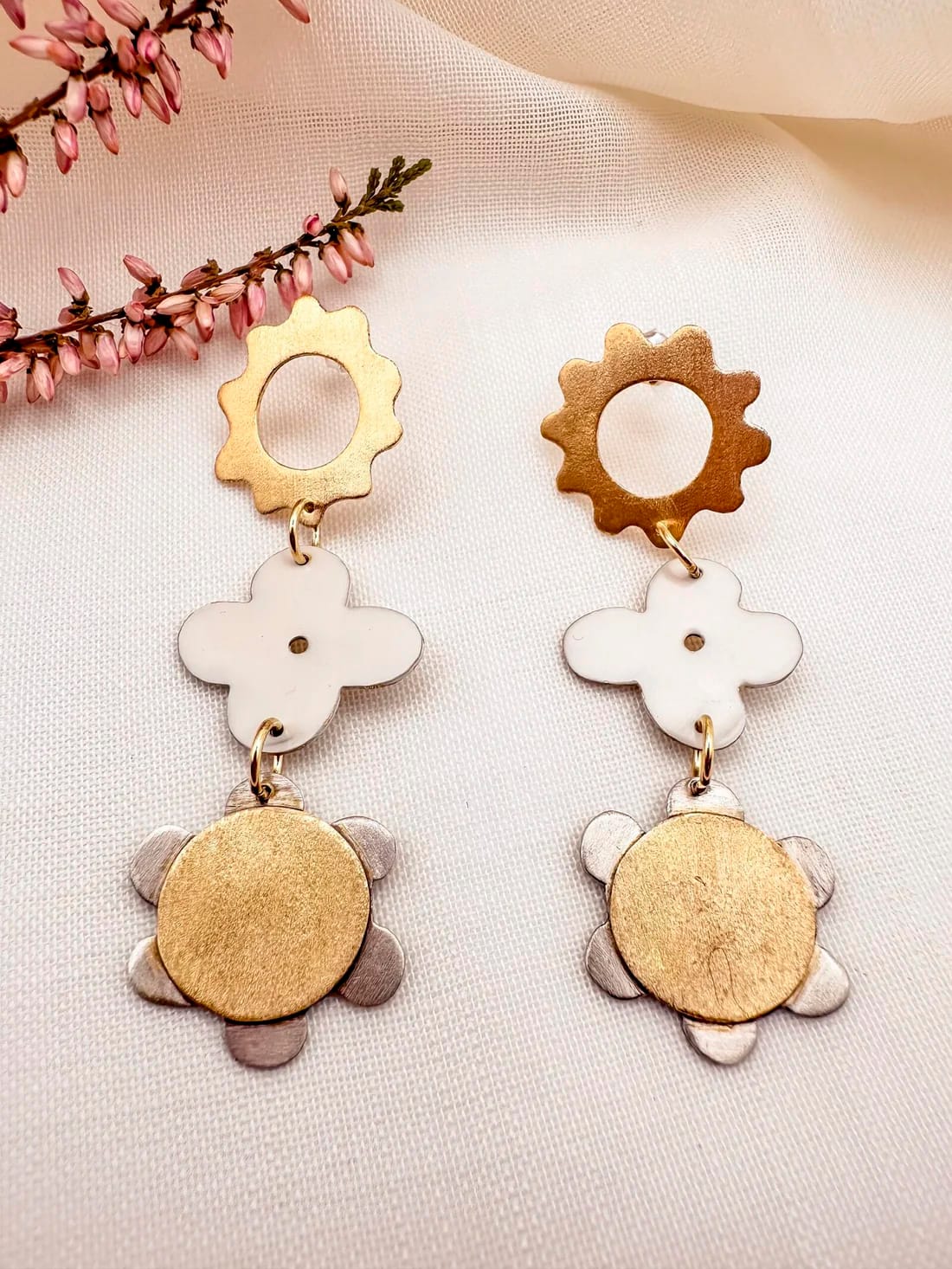
These earrings offer a distinctive reinterpretation of three emblematic elements of Asturian cultural heritage. The first component represents the “ramu”, a traditional offering carried during local festivals and pilgrimages in Asturias. The second element evokes the hydrangea; a flower commonly associated with these ceremonial bouquets and highly present in the Asturian landscape. The final component features the “panderetas” (tambourines), symbolizing traditional music and festivity. Together, the three motifs embody a visual narrative of Asturian tradition. The earrings are handcrafted using recycled silver and certified sustainable metals, employing traditional jewellery-making techniques such as saw piercing and meticulous metalworking. While rooted in artisanal methods, the piece is given a refined, contemporary finish suitable for modern wear. This combination of heritage, craftsmanship, and contemporary design exemplifies an effective reinterpretation of traditional culture, demonstrating how artisan techniques can be mobilized to produce sustainable, high-quality, and culturally meaningful jewellery.
DETAILS
First motif: Ramu
Second motif: Hydrangea
Third motif: Asturian tambourine
Inspiration
Ramu
Hydrangea
Asturian tambourine
Location
The selection of this artefact is the responsibility of designer Maria Bruno Néo and is part of her doctoral work ‘A HISTÓRIA INCOMPLETA DO DESIGN PORTUGUÊS: CONTRIBUTOS PARA A INSCRIÇÃO DA DESIGNER HELENA CARDOSO/THE INCOMPLETE HISTORY OF PORTUGUESE DESIGN: CONTRIBUTIONS TO THE INSCRIPTION OF DESIGNER HELENA CARDOSO’ supervised by Professors Susana Barreto and Luís Mendonça, both from the Faculty of Fine Arts at the University of Porto/Portugal.